 Save
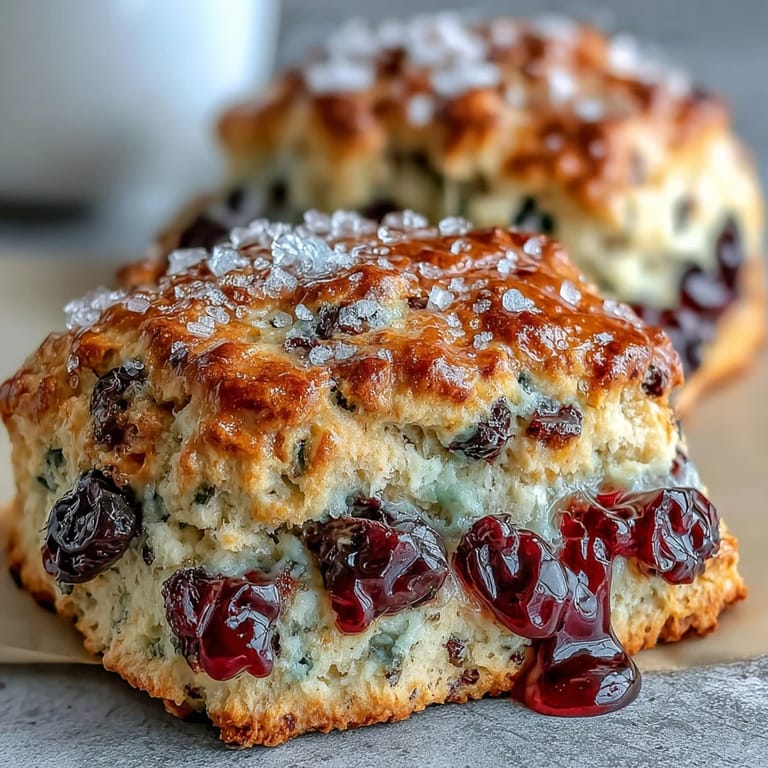
Save There's something about the smell of sourdough hitting a hot oven that makes me pause mid-morning routine. My starter had been sitting on the counter, unfed and bubbly, when I decided those scraps shouldn't go to waste—especially not on a day when fresh blueberries were staring at me from the farmers market bag. I wanted something that tasted like spring, with that gentle tang sourdough brings and enough lemon to make your mouth wake up. These scones came together almost by accident, but they've become the kind of thing I make now when I want to prove to myself that simple ingredients can taste intentional.
I made a batch for a brunch gathering last April, setting them out still warm with softened butter and jam on the side. A friend picked one up, broke it in half, and just stopped talking for a moment—the steam rose up, and I could see the blueberries inside had turned almost translucent from the heat. She asked for the recipe before even tasting it, just from the smell. That's when I knew these were something worth making again and again.
Ingredients
- All-purpose flour: The foundation for tender crumbs; make sure it's fresh since older flour can make scones tough and dense.
- Granulated sugar: Keeps the dough tender and balances the tartness from the lemon and sourdough.
- Baking powder and baking soda: Work together to lift the scones without heaviness—don't skip the baking soda as it helps activate the sourdough tang.
- Fine sea salt: Heightens all the flavors you're building, so don't reduce it.
- Lemon zest: Use a microplane to get fine, fragrant zest that distributes evenly without tough pieces.
- Unsalted butter, cold and cubed: Cold butter creates those flaky layers you're after; let it sit in the freezer for ten minutes before cutting it in.
- Sourdough discard: The star player that adds moisture, tanginess, and depth; room temperature discard mixes in smoothly without cooling the dough.
- Heavy cream: Adds richness and keeps the crumb tender; room temperature mixes better than cold.
- Egg: Binds the dough and gives the tops that beautiful golden finish.
- Vanilla extract: A quiet note that rounds out the lemon brightness.
- Freshly squeezed lemon juice: Never use bottled here; fresh juice tastes alive and makes a real difference in the final taste.
- Fresh blueberries: If using frozen, don't thaw them—the ice crystals actually help keep them intact and prevent dye from bleeding into the dough.
- Coarse sugar for topping: Creates a slight crunch and catches light beautifully, though it's optional.
Tired of Takeout? 🥡
Get 10 meals you can make faster than delivery arrives. Seriously.
One email. No spam. Unsubscribe anytime.
Instructions
- Heat your oven and prepare:
- Set the oven to 400°F and line a baking sheet with parchment paper while you're gathering your ingredients. A preheated oven means your scones will rise immediately when they hit the heat.
- Combine dry ingredients:
- Whisk together the flour, sugar, baking powder, baking soda, salt, and lemon zest in a large bowl. The zest should distribute evenly so every bite carries that lemon flavor.
- Cut in the cold butter:
- Add the cubed, cold butter and work it in using a pastry blender, fork, or your fingertips until the mixture looks like coarse sand or breadcrumbs. This is what creates those tender, flaky layers—the cold butter creates steam pockets as it bakes.
- Mix the wet ingredients separately:
- In another bowl, whisk the sourdough discard, cream, egg, vanilla, and lemon juice until smooth and combined. This takes about one minute and ensures everything is evenly distributed.
- Bring it together gently:
- Pour the wet mixture into the dry ingredients and stir just until combined—this is crucial. Overmixing develops gluten and makes scones tough instead of tender. Stop stirring as soon as you don't see dry flour.
- Fold in the blueberries:
- Gently fold the blueberries into the dough using as few strokes as possible. If they're frozen, they'll stay firmer and won't stain the dough as much.
- Shape the dough:
- Turn the dough out onto a lightly floured surface and gently pat it into a circle about 1 inch thick and 7 inches across. Don't knead or compress it—let it be loose and light.
- Cut into wedges:
- Using a sharp knife or bench scraper, cut the circle into 8 wedges like you're cutting a pie. Transfer each wedge to the prepared baking sheet with a little space between them so steam can circulate.
- Top and bake:
- Brush the tops lightly with cream and sprinkle with coarse sugar if you're using it. Bake for 18 to 22 minutes until the tops are golden brown and the centers feel set when you gently press them.
- Cool properly:
- Let the scones sit on the baking sheet for 5 minutes—this helps them firm up. Then transfer them to a wire rack so the bottoms don't steam and become soggy.
 Save
Save There was a morning when my daughter helped me fold in the blueberries, and she marveled at how they stayed so purple and whole even as we stirred. She asked why the dough didn't turn blue, and I realized in that moment that getting the details right—frozen berries, gentle folding, the right temperature—wasn't just about technique. It was about honoring the ingredient, letting the blueberry be itself. That's when I understood why these scones tasted like more than breakfast.
Why Sourdough Discard Works Here
Using sourdough discard instead of buttermilk or yogurt adds a complexity that's hard to name. It brings moisture and a gentle tang without being aggressive or sour—the acid reacts with the baking soda to help the scones rise, and the fermented flavor pairs beautifully with lemon and blueberries. If you don't have active sourdough going, you can substitute with buttermilk or Greek yogurt thinned with a splash of milk, but you'll lose some of that depth that makes these special.
The Lemon Question
Both the zest and the juice matter here, and they do different things. The zest provides bright, fragrant oil and little visible flecks of flavor, while the juice adds tartness and moisture. Too little of either and the scones taste generic; too much and the lemon overpowers the blueberry. I learned this by experiment, and now I measure both carefully. Fresh lemon juice really does taste different from bottled—the difference is noticeable even to people who don't usually notice citrus.
Variations and Next Steps
Once you master these, you have a template for endless possibilities. I've made them with raspberries and orange zest, with white chocolate chunks and cranberry, even with a simple glaze for special mornings. The sourdough base stays the same, and the tang it brings works with almost any fruit or flavor combination you want to explore. The beauty is that you're not fighting the recipe to make changes—it was built to be adaptable.
- A simple lemon glaze made from powdered sugar and fresh lemon juice transforms these into something more elegant if you're serving them for a gathering.
- Store cooled scones in an airtight container at room temperature for up to two days, though they taste best on the day they're made.
- If you want to prep ahead, you can shape and freeze the wedges unbaked, then bake directly from frozen for an extra 3 to 5 minutes.
 Save
Save These scones are proof that using what you have on hand—sourdough discard that might otherwise get tossed, blueberries from the market, lemon from the produce bin—creates something that tastes intentional and delicious. Bake a batch this week.
Questions & Answers
- → Can frozen blueberries be used?
Yes, fold frozen blueberries directly into the dough without thawing to prevent color bleed.
- → How do I get a tender crumb in these scones?
Using cold butter cut into flour and avoiding overmixing keeps the scones tender and flaky.
- → What’s the role of sourdough discard here?
It adds a subtle tanginess and moisture, contributing to the scones' distinctive flavor and texture.
- → Can I substitute buttermilk for the cream?
Buttermilk can be used as a substitute for cream to add slight acidity and richness.
- → How to enhance the lemon flavor further?
After baking, drizzle a simple lemon glaze made from powdered sugar and lemon juice over the tops.
- → How should the scones be stored?
Keep them in an airtight container at room temperature for up to two days to maintain freshness.