 Save
Save The first time I really understood beignets wasn't from a cookbook—it was watching my neighbor, Mrs. Chen, fry a batch in her kitchen while powdered sugar seemed to float through the air like snow. I'd always thought they were difficult, fussy things, but seeing her pull those puffy squares from the oil with such ease made me realize they just needed patience and warm hands. That afternoon, she handed me one still steaming, and I bit into the crispy outside only to find pillowy softness inside, each layer giving way like clouds. Now, years later, making beignets has become my way of turning an ordinary Tuesday into something that tastes like celebration.
I made these for my daughter's book club once, and I'll never forget how five grown women went quiet the moment they bit into them, powdered sugar dusting their fingers and laughter in their eyes. One friend kept saying 'just one more' while shaking her head, and the plate emptied in minutes. Watching something you made bring that kind of honest joy to people—that's when you know a recipe is really worth keeping.
Ingredients
- All-purpose flour (3 1/2 cups): This is your foundation, and the amount really matters—too little makes them dense, too much makes them tough, so measure carefully or use a scale if you have one.
- Warm water (1 cup): Temperature here genuinely matters because yeast is living; if it's too hot you'll kill it, too cold and nothing happens, so aim for that 110°F sweet spot.
- Whole milk (1/4 cup): This adds richness and tenderness that water alone can't deliver, making the crumb softer and more luxurious.
- Granulated sugar (1/4 cup): Beyond sweetness, it feeds the yeast and helps the dough rise properly, so don't skip it.
- Active dry yeast (2 1/4 tsp): This is what makes them puff up into those glorious pillows—one packet does the job, and checking the date on your yeast makes all the difference.
- Large egg (1): Adds structure and a subtle richness that helps them hold their shape while frying.
- Unsalted butter (2 tbsp, melted): Melted goes in smoother than cold, and using unsalted lets you control the salt level throughout.
- Salt (1 tsp): Don't underestimate this tiny amount—it brightens everything and makes the flavors sing.
- Vegetable oil for frying: Use something neutral that can handle high heat without smoking, and have extra on hand because you'll need more than you think.
- Powdered sugar (1 1/2 cups): The generous dusting is essential to the experience—don't be shy, this is your signature move.
Tired of Takeout? 🥡
Get 10 meals you can make faster than delivery arrives. Seriously.
One email. No spam. Unsubscribe anytime.
Instructions
- Wake up the yeast:
- Combine warm water with a pinch of sugar and yeast in a small bowl, then wait about 5 minutes. You'll see it bubble and foam—this is proof it's alive and ready to work its magic.
- Build your base:
- Mix flour, remaining sugar, and salt in a large bowl, creating a well of dry ingredients. This setup makes it easier to incorporate the wet mixture without overmixing.
- Bring it together:
- Pour the foamy yeast mixture, milk, egg, and melted butter into the dry ingredients and stir until you have a shaggy mess—this is the sweet spot before kneading, not too organized but heading in the right direction.
- Knead to smoothness:
- Work the dough by hand or with a stand mixer for 5 to 7 minutes until it becomes smooth and elastic. You'll feel it transform under your hands, and when you press it, it should bounce back gently.
- Let time do the work:
- Place dough in a lightly oiled bowl, cover it, and let it rise in a warm spot for 1 to 1.5 hours until it's roughly doubled. A warm oven with just the light on works perfectly, or a sunny corner of your kitchen.
- Shape and cut:
- Punch down the risen dough, transfer it to a floured surface, and roll it out to about 1/4 inch thick. Using a sharp knife or pizza cutter, cut it into roughly 2-inch squares—they don't need to be perfect.
- Heat the oil:
- Bring vegetable oil to 350°F in a deep fryer or heavy pot; a thermometer here is your friend because temperature makes the difference between golden and greasy. If you don't have a thermometer, a small piece of dough should sizzle immediately and float to the surface.
- Fry with intention:
- Working in batches so you don't crowd the pan, carefully place beignets in the hot oil and fry for about 1 to 2 minutes per side until they're puffed and golden brown. They'll naturally flip when the first side is done, but you can nudge them gently with a slotted spoon.
- Drain and dust:
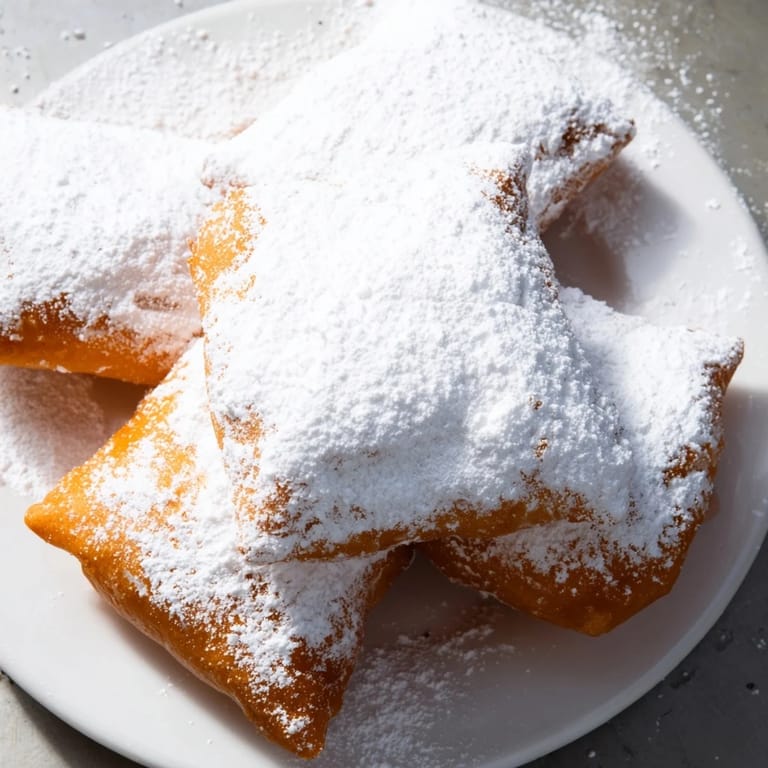
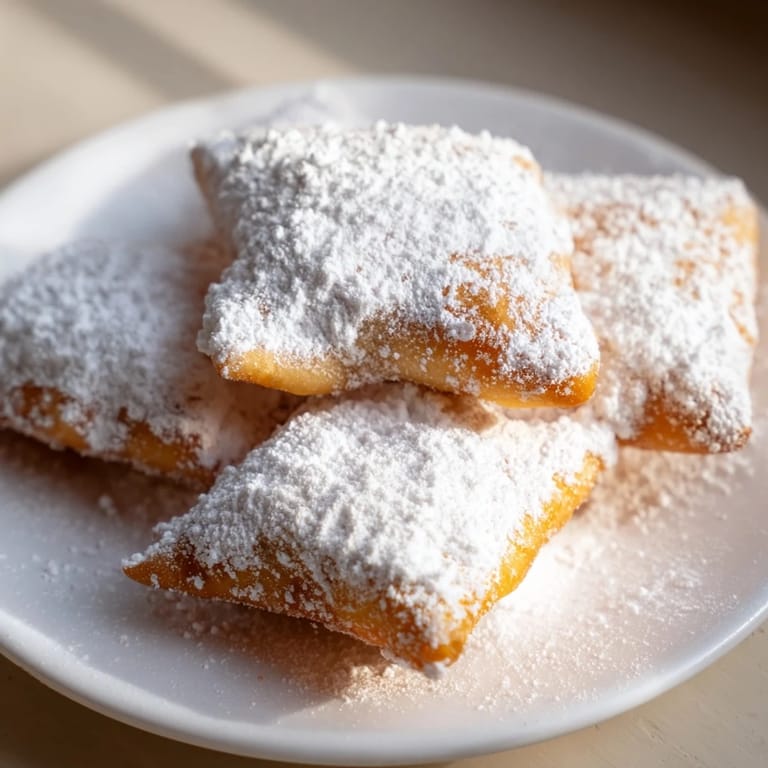
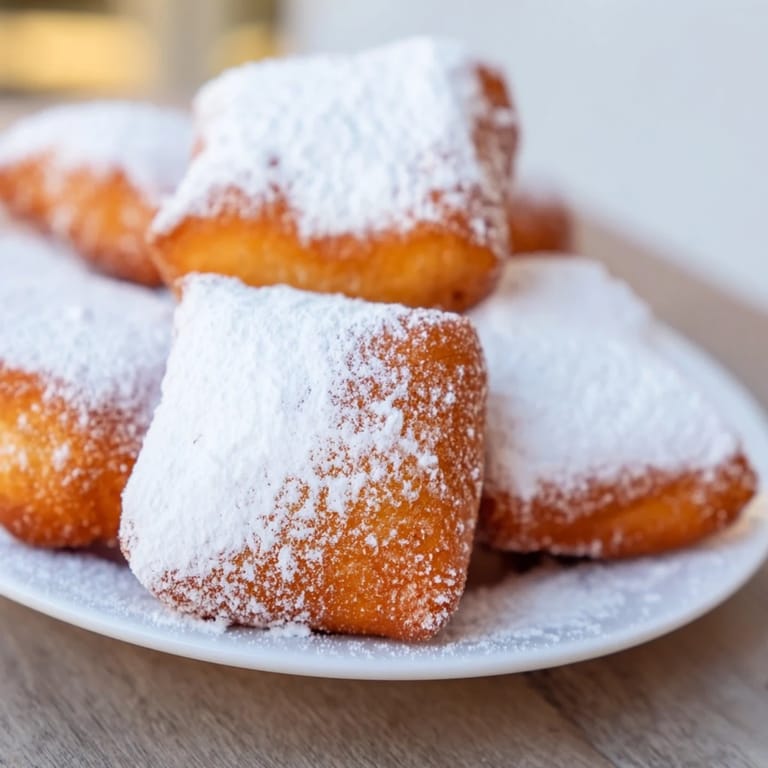
- Remove beignets with a slotted spoon and let them drain on paper towels for just a minute. While they're still warm, dust them generously with powdered sugar—this is where the magic happens and they transform into those iconic pillows.
 Save
Save There's something almost sacred about that moment when you pull a perfectly fried beignet from hot oil and watch it puff up one final time as it hits the air. My hands are always a little sticky with powdered sugar by the end, and somehow that feels exactly right.
The Magic of Warm Oil
Temperature control isn't just a suggestion—it's the entire reason beignets turn into pillowy clouds instead of dense, soggy dough. I learned this the hard way, overcrowding my pan and letting the temperature drop, resulting in what my family generously called 'fried pancakes.' The oil needs to stay steady at 350°F so each beignet fries at the same pace, puffing up evenly on both sides.
Timing and the Rise
The dough rise feels slow if you're watching the clock, but that hour and a half is when the yeast develops flavor and creates the structure that gives you those incredible layers. I once tried rushing it at 45 minutes thinking I could fry them anyway, and they came out flat and tough—completely missing the point. Now I use that rise time to set my table or prep something else, treating it as a gift of downtime rather than something to fight against.
Customizing Your Beignets
The base recipe is perfect as is, but the dough can handle a little personality—a splash of vanilla extract adds a subtle warmth, while a pinch of nutmeg transforms them into something almost spiced cake-like. Some people love adding a touch of cinnamon sugar before the powdered sugar dusting, or even a hint of lemon zest if you're feeling adventurous. The powdered sugar coating is essential, but after that final dusting, you could serve them with café au lait for an authentic New Orleans moment, or alongside fresh berries if you want to pretend they're somewhat wholesome.
- A tiny bit of vanilla or nutmeg in the dough brings unexpected depth without taking over.
- Serve them warm and fresh because beignets lose their magic as they cool—reheat them at 350°F for a few minutes if you must wait.
- That generous powdered sugar dusting is part of the charm, not a mistake, so lean into it completely.
 Save
Save Beignets are one of those recipes that rewards patience and attention but gives back tenfold in joy. Once you've made them once, you'll understand why they've been a beloved treat for generations.
Questions & Answers
- → What gives the dough its fluffy texture?
The yeast fermentation combined with a proper rising time creates air pockets in the dough, resulting in a light and fluffy texture after frying.
- → Why is the dough dusted with powdered sugar after frying?
Powdered sugar adds a sweet contrast to the crisp fried exterior and enhances the traditional flavor profile associated with this New Orleans classic.
- → Can I prepare the dough in advance?
Yes, you can prepare the dough ahead and allow it to rise slowly in the refrigerator overnight to develop more flavor.
- → What oil temperature is ideal for frying the dough squares?
Maintaining oil at about 350°F (175°C) ensures even puffing and a golden, crisp exterior without absorbing excess oil.
- → Are there any suggested flavor enhancements for the dough?
Adding a touch of vanilla extract or a pinch of nutmeg can enrich the dough with subtle aromatic notes.