 Save
Save The first time I made dandelion jelly, the kitchen was already blooming with the scent of early spring. It wasn’t some grand plan—the stray memory of yellow dots flashing across lawns made me curious. Cleaning those little petals became oddly calming as a nearby window carried in the chatter of honey bees on their rounds. As I measured out sticky sugar and listened to the kettle begin to sing, I realized I was quietly grinning at the cheerful mess. Sometimes the best recipes begin with a question that’s almost a dare: why not?
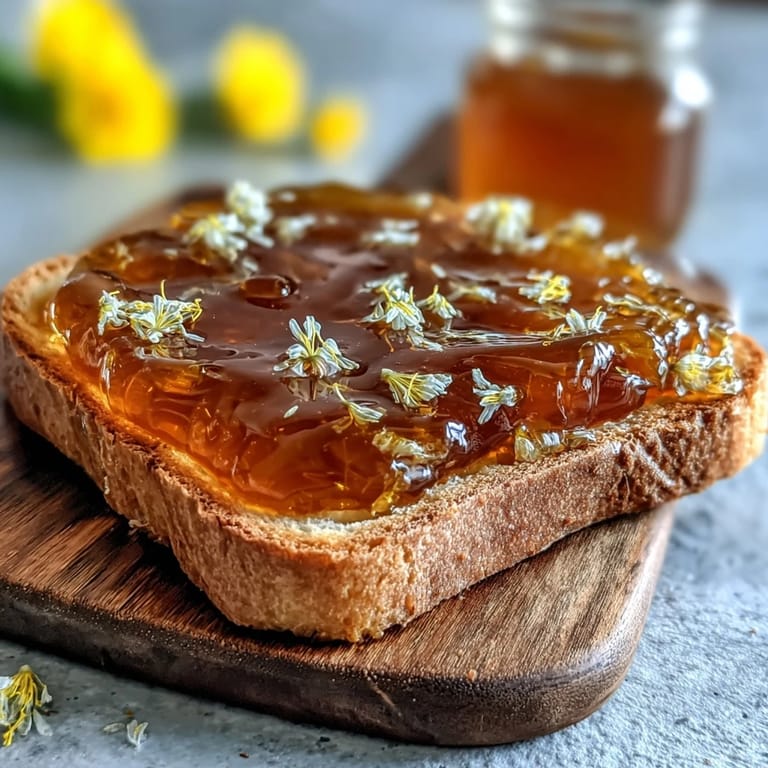
One afternoon, I enlisted my skeptical younger cousin to help me pick dandelions for a new batch. She protested at first, worried we’d get funny looks, but soon she was racing me across the yard to fill her basket. When we finally poured our finished jelly onto warm toast, even she admitted she’d never tasted anything quite like it. That shared laughter and sticky-fingered taste test made our hours in the garden worth it. Now, she insists we do it every spring.
Ingredients
- Dandelion Petals: Only use the tender yellow parts—leaving out the green bits keeps things delicate and avoids bitterness. Foraging after a rain makes petal plucking even easier.
- Water: Fresh, cold water is essential as it draws out the subtle floral notes when steeping the petals.
- Lemon Juice: This adds a much-needed brightness and balances the sweetness, whether you use fresh lemons or bottled juice.
- Powdered Fruit Pectin: I learned to always check the expiration date—fresh pectin helps your jelly set perfectly without extra fuss.
- Granulated Sugar: The backbone of this jelly, sugar not only sweetens but also helps the preserve set and keeps it shelf-stable.
Tired of Takeout? 🥡
Get 10 meals you can make faster than delivery arrives. Seriously.
One email. No spam. Unsubscribe anytime.
Instructions
- Gather and Prep Your Petals:
- Rinse dandelions well and pinch off just the golden parts, letting the earthy scent fill your hands. Don’t rush—any stray greens can make things a little bitter, so pick carefully and enjoy the yellow confetti gathering in your bowl.
- Steep the Flavor:
- Bring water to a lively boil, then shower in your dandelion petals. The kettle hisses down to silence once you cover it, and the petals slowly tint the water a soft gold over the next hours.
- Strain and Ready:
- Pour everything through cheesecloth and squeeze gently—this step always reminds me of wringing out a summer dress after rain. Aim for almost four cups of fragrant liquid; if you’re short, a splash more water is fine.
- Cook Up the Jelly:
- Pour your dandelion tea into a big pot, stir in lemon juice and pectin, and bring it all to a frothy, rolling boil. Add the sugar in a quick cascade, stir, and let it roar for 1 to 2 minutes–that wild bubbling is your cue to skim off any foam and turn off the heat.
- Jar and Seal:
- Ladle the hot, golden jelly into clean, warm jars, leaving just a little headspace. Wipe the rims, spin on the lids, and lower them into a briskly boiling water bath for 5 minutes, or skip the bath and stash them in the fridge for sooner snacking.
 Save
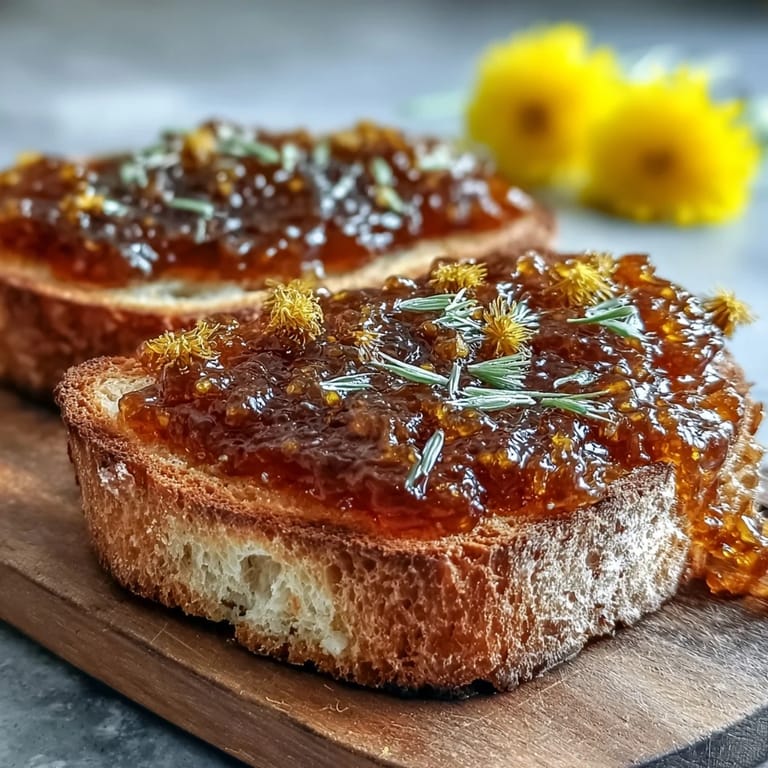
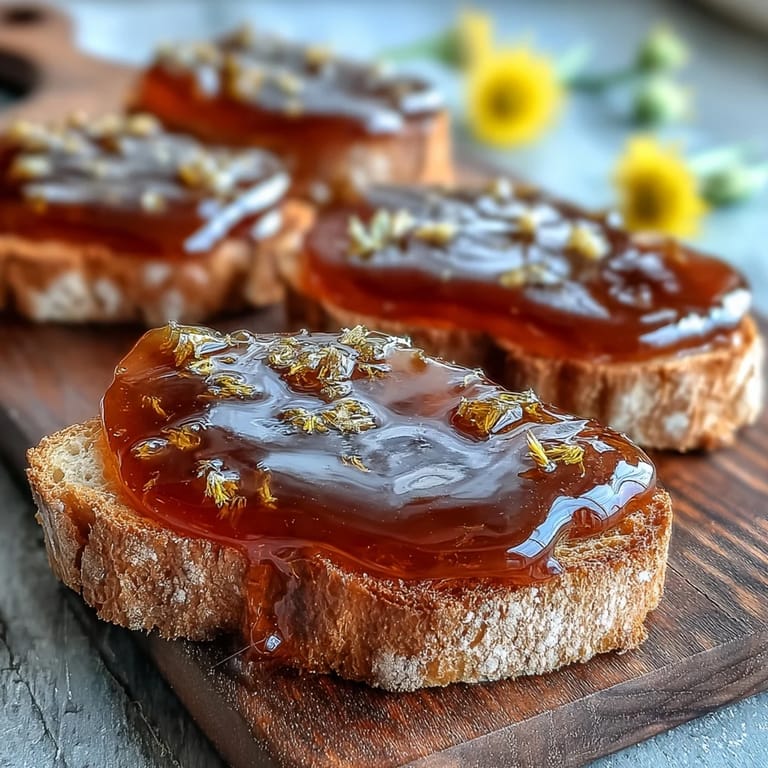
Save When we finally opened the first jar for breakfast on a chilly Saturday, the golden jelly gleamed in the morning light. That simple moment—warm toast, laughter, and marmalade sunshine—made it a family ritual rather than just another kitchen experiment.
Picking Dandelions (Without the Fuss)
Gathering dandelions can honestly be half the fun—or half the battle, if you let it. I’d recommend a big bowl and gloves if you’re feeling prissy, but bare hands bring the strongest fragrance and a dose of nostalgia. Avoid roadsides and always make sure the area hasn’t been sprayed. Even the act of sitting and picking becomes a quiet little adventure when you’re looking for the freshest flowers.
Making the Jelly Truly Set
Getting the jelly to set can feel mysterious, and I’ve hovered over more than one pot in worried suspense. The secret is patience—let it boil hard after you add the sugar, and give it time to cool completely. If things go wrong and it’s still loose after a night, reboiling won’t hurt the flavor or color. Just remember to add a touch more pectin next time for good measure.
Tiny Ways to Make It Yours
Sometimes I slip in a little orange zest for a change, or use different local honeys for an even richer floral flavor. Friends have stirred it into yogurt, glazed cookies, or even swirled it through drinks for a golden twist.
- Never skip sterilizing the jars if you want your jelly to last.
- A jar funnel makes things cleaner, but a steady hand and patience work too.
- Store opened jars in the fridge to keep things bright and fresh.
 Save
Save I hope making this dandelion jelly brings a spot of sunshine to your kitchen, just as it has in mine. There’s real joy in turning tiny treasures into sweet gold you can share.
Questions & Answers
- → How do I prepare dandelion petals for this jelly?
Use unsprayed, fresh dandelion flowers. Rinse well and carefully separate yellow petals, avoiding the green parts to prevent bitterness.
- → Why is lemon juice added?
Lemon juice helps balance the sweetness, enhances the floral flavor, and assists the gelling process for a successful set.
- → Can I use other sweeteners besides granulated sugar?
Standard sugar is recommended for the best texture, but with experimental pectin types, you might try honey or low-sugar alternatives.
- → How long does dandelion jelly keep?
When processed and sealed properly, jars will last up to a year in a cool, dark place. Refrigerate once opened and use within a few weeks.
- → What can I serve with this jelly?
Spread on toast, biscuits, scones, or swirl into yogurt. It also pairs beautifully with cheese boards and desserts.
- → Is this jelly suitable for gluten-free or vegetarian diets?
Yes; all ingredients are naturally gluten-free and vegetarian, making it suitable for a wide range of dietary needs.