 Save
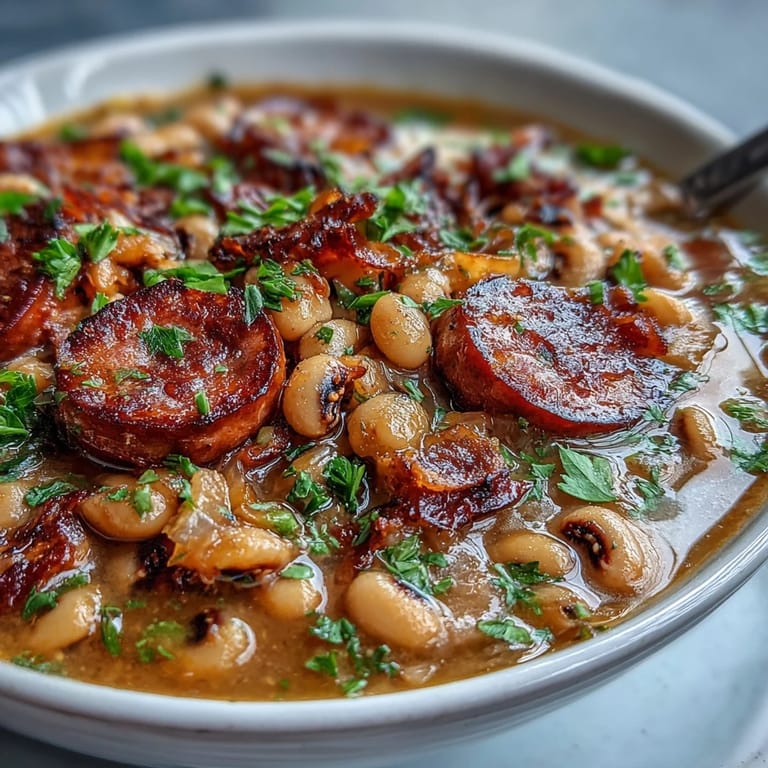
Save My grandmother used to say that black-eyed peas on New Year's Day weren't just food—they were insurance against a lean year ahead. I didn't fully understand the superstition until I made this dish for the first time in my tiny apartment kitchen, the smell of smoky sausage and bay leaves filling every corner, and suddenly I got it. There's something about the ritual of it, the way the peas transform from hard little seeds into something warm and nourishing, that feels less like cooking and more like making a promise. This Southern classic has become my annual tradition, and I've learned that the real luck comes from taking your time with it.
I'll never forget watching my mom's face light up when I served this to her unexpectedly one January evening—she didn't know I'd been practicing, and the fact that I nailed the smoky depth she always chased in her own kitchen made her tear up a little. That's when I realized this dish carries more weight than just tradition; it's about honoring where we come from and sharing that with the people we love.
Ingredients
- Smoked sausage (Andouille or Kielbasa), sliced: This is where the soul of the dish lives—the smoke flavor infuses the entire pot, so don't skip it or swap it for regular sausage.
- Thick-cut bacon, diced: Render it slowly to build a flavorful base; the rendered fat is liquid gold for sautéing your vegetables.
- Dried black-eyed peas, rinsed and sorted: Sorting removes any small stones or debris, and soaking makes them cook evenly without splitting.
- Onion, green bell pepper, celery, minced garlic: This aromatic trinity, known as the holy trinity in Louisiana cooking, creates the flavor foundation before the peas even go in.
- Low-sodium chicken broth and water: The liquid ratio matters—too much broth and you lose the velvety texture, too little and the peas won't cook through properly.
- Bay leaves, smoked paprika, dried thyme, cayenne pepper: Layer these spices gradually; smoked paprika is non-negotiable for authenticity, but cayenne is your friend only if you like heat.
- Kosher salt and freshly ground black pepper: Season in stages as the peas cook, not all at once, so you can taste your way to perfect seasoning.
- Fresh parsley and hot sauce: The parsley adds brightness at the end, and hot sauce lets everyone customize their heat level at the table.
Tired of Takeout? 🥡
Get 10 meals you can make faster than delivery arrives. Seriously.
One email. No spam. Unsubscribe anytime.
Instructions
- Prepare your peas the day before (or use the quick soak):
- Overnight soaking is ideal—it hydrates the peas evenly and cuts cooking time—but if you're short on time, the one-hour quick soak with boiling water works just as well. Either way, drain and rinse before you add them to the pot.
- Build your flavor base with bacon:
- Cook the diced bacon low and slow over medium heat until it's crispy and the fat has rendered into the pot. This fat becomes the canvas for everything that follows, so don't rush it.
- Brown the sausage until it develops color:
- A few minutes in the same pot adds a flavorful crust and deepens the smokiness. Remove it and set it aside with the bacon—you'll bring them back later.
- Sauté your vegetables until they soften:
- The onion, bell pepper, and celery need about five to six minutes to become tender and release their flavors into the rendered fats. Listen for them to start quieting down in the pot; that's when you know they're ready.
- Add garlic and toast it briefly:
- Just one minute—long enough to wake up the aroma but not so long that it turns bitter. You'll smell the shift immediately.
- Combine everything and build your broth:
- Stir in the soaked peas, broth, water, bay leaves, and spices. The mixture should look slightly soupy at this point. Return the bacon and sausage to the pot and bring everything to a boil.
- Simmer low and slow until peas are tender:
- Once it boils, reduce heat to low, cover, and let it bubble gently for one to one and a half hours. The peas will gradually soften and the broth will become creamy and velvety as the peas release their starches. You're looking for peas that break apart easily when you press one against the side of the pot.
- Taste, adjust, and finish with freshness:
- Remove the bay leaves, taste for salt and pepper, and sprinkle with fresh parsley just before serving. The parsley adds a bright contrast to all that rich, smoky depth.
 Save
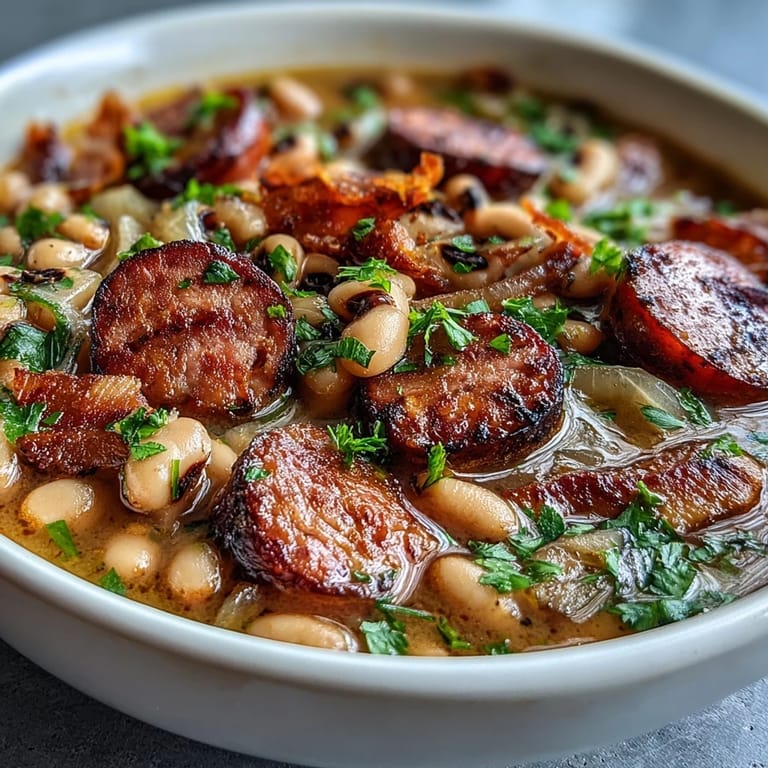
Save There's a moment, usually about forty minutes into cooking, when you walk into the kitchen and the aroma hits you so hard that you pause whatever you were doing and just breathe it in. That's when you know the magic is happening—the flavors are marrying, the broth is darkening, and something simple is becoming extraordinary.
The Story Behind Eating Black-Eyed Peas
Black-eyed peas on New Year's Day is a tradition rooted in African American and Southern culture, believed to bring luck and prosperity for the coming year. Whether you're a believer or not, there's something powerful about sitting down to a meal that carries that kind of intention and history. The humble pea, paired with smoky meat and aromatic vegetables, transforms into something that feels ceremonial and deeply nourishing all at once.
Making It Your Own
This recipe is forgiving and flexible, which is part of its beauty. I've added diced tomatoes in summer, thrown in collard greens for extra body, and even experimented with different sausages depending on what the butcher had available. Some years I'll add a splash of vinegar at the end for brightness, other times I'll let it be purely savory and warming. The core stays the same, but the dish always reflects the mood of the moment.
Serving and Pairing
Serve this over steamed white rice, with thick slices of warm cornbread on the side and a small bowl of hot sauce for people to add their own heat. Sautéed collard greens or kale add a bitter contrast that balances the richness beautifully. A cold glass of iced tea or a crisp white wine cuts through the smokiness, though honestly, a quiet moment with just a spoon and a warm bowl is sometimes the best pairing of all.
- Make extra and freeze it in portions—it reheats beautifully and tastes even more developed the next day.
- If you want less fat, use turkey sausage, but increase the smoked paprika to keep that signature smoky character.
- For a vegetarian version, swap the sausage and bacon for extra smoked paprika and a teaspoon of liquid smoke, then use vegetable broth instead.
 Save
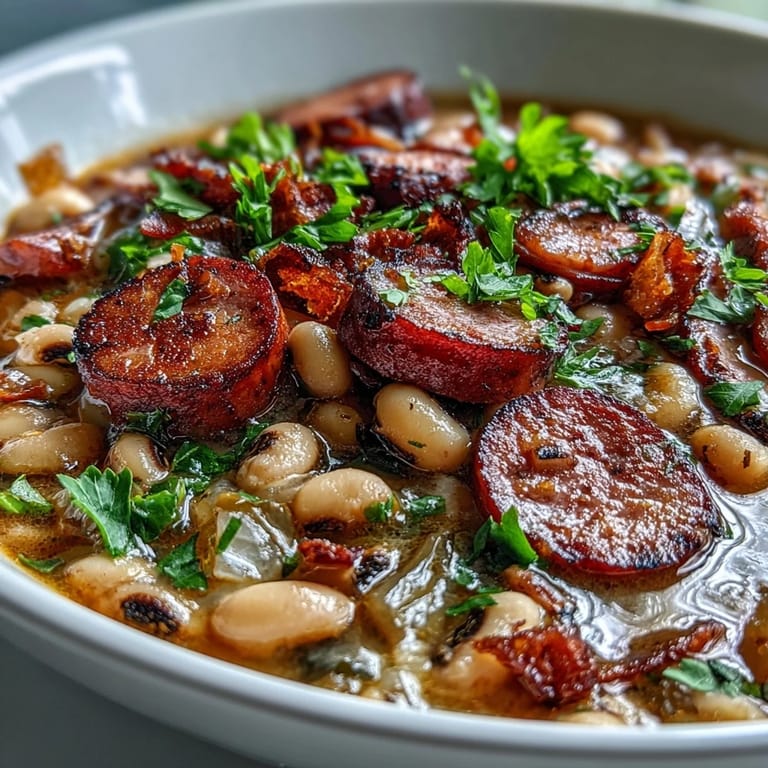
Save This dish is less about following a recipe perfectly and more about honoring a tradition while making it feel like your own. Every time you make it, you're part of something bigger than dinner.
Questions & Answers
- → Do I need to soak black-eyed peas before cooking?
Yes, dried black-eyed peas require soaking overnight to soften them and reduce cooking time. Alternatively, use the quick-soak method by covering with boiling water for one hour.
- → Can I make this vegetarian?
Absolutely. Simply omit the bacon and sausage, use vegetable broth instead of chicken broth, and add extra smoked paprika or liquid smoke to maintain that savory depth.
- → What should I serve with black-eyed peas?
Traditional Southern pairings include steamed white rice, cornbread, sautéed collard greens, or okra. A crisp white wine or sweet iced tea complements the meal perfectly.
- → How long do leftovers keep?
Stored in an airtight container in the refrigerator, these black-eyed peas will keep for up to 4-5 days. The flavors often deepen and improve after a day or two.
- → Can I use canned black-eyed peas instead?
You can substitute canned peas, but reduce the cooking time to 20-30 minutes and use less broth since canned peas are already cooked. Dried peas offer better texture and flavor absorption.