 Save
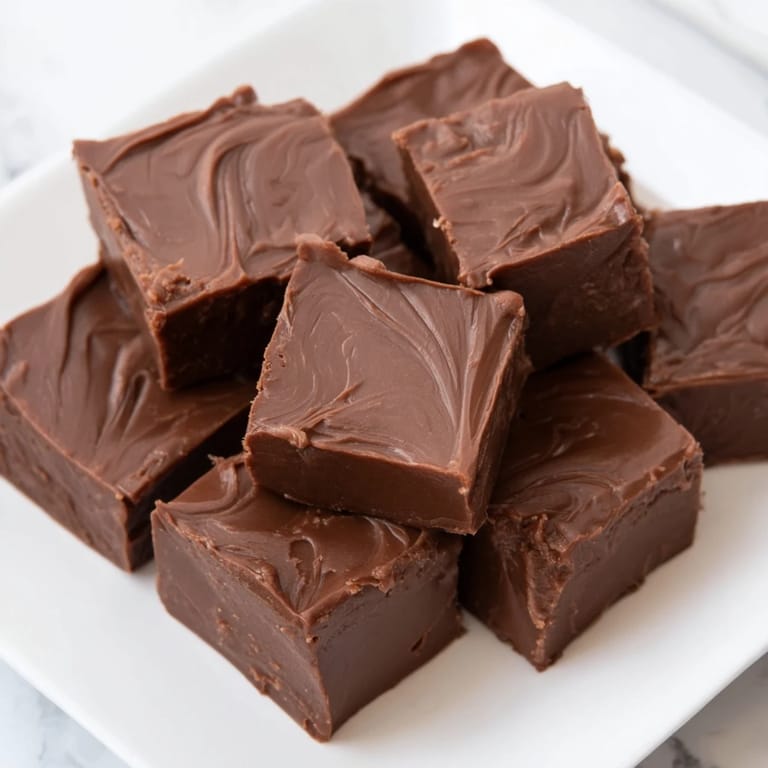
Save My mom used to make fudge on rainy afternoons, the kind where the whole kitchen would smell like melting chocolate and butter before a single bite ever happened. She'd let me stand on a step stool to watch the thermometer climb, and I remember the exact moment when the mixture would shift from syrupy to glossy—like watching sugar transform into something precious. The funny thing is, I spent years thinking fudge was impossible magic until I realized it was just patience and a candy thermometer. Now I make it not because it's complicated, but because those quiet kitchen moments are exactly what I've come to love.
I brought a batch to my neighbor's holiday party once, and within twenty minutes they were completely gone—people were actually asking for the recipe before they'd even swallowed. That's when I knew this wasn't just good, it was the kind of simple that people respect more than anything complicated.
Ingredients
- Unsalted butter (1 cup): Use real butter—it's non-negotiable for that silky texture and genuine chocolate flavor that makes fudge worth eating.
- Whole milk (2/3 cup): The fat in whole milk creates that creamy mouthfeel; don't be tempted to use skim.
- Granulated sugar (3 cups): This is the backbone that carries you to soft-ball stage and creates that signature fudgy structure.
- Semi-sweet chocolate chips (2 cups): Quality matters here—I learned the hard way that cheap chocolate makes grainy fudge, so pick something you'd actually eat on its own.
- Pure vanilla extract (1 tsp): Real vanilla, not imitation, makes the difference between forgettable and unforgettable.
- Fine sea salt (1/4 tsp): A tiny pinch that amplifies the chocolate flavor and reminds your taste buds why they love this.
Tired of Takeout? 🥡
Get 10 meals you can make faster than delivery arrives. Seriously.
One email. No spam. Unsubscribe anytime.
Instructions
- Set Up Your Station:
- Line your 8x8 pan with parchment, letting it overhang the edges so you can lift the whole thing out later without wrestling it. This small step saves you from the frustration of scraping fudge off the corners.
- Combine and Begin:
- Melt the butter in your heavy saucepan over medium heat, then stir in sugar and milk until it comes together like wet sand. Once you bring it to a boil, keep stirring—this keeps the mixture from crystallizing and turns it silky instead of grainy.
- Cook to Soft-Ball:
- Clip your thermometer to the pan and let it climb to 238°F, which takes about 10 to 15 minutes of patient stirring. You'll feel the mixture thicken slightly and notice it starts to look more like taffy than syrup—that's your signal you're close.
- Transform with Chocolate:
- Pull it off the heat and add the chocolate, vanilla, and salt all at once, then stir like you mean it until everything melts into glossy perfection. This is where the magic happens, and the mixture will go from liquid to thick almost before your eyes.
- Pour and Set:
- Work quickly—pour the fudge into your pan and smooth it fast before it starts to set too soon. Let it sit undisturbed at room temperature for the full 2 hours; rushing this step is where most fudge dreams die.
- Cut and Enjoy:
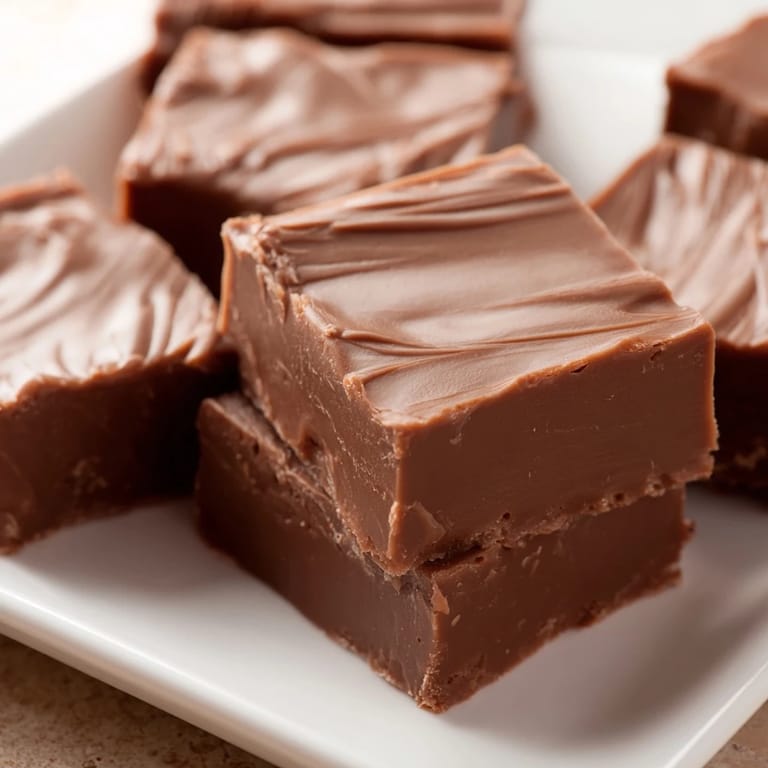
- Use a sharp knife to cut 36 squares, wiping the blade clean between cuts so each piece looks clean and intentional. Store in an airtight container and watch them disappear.
 Save
Save My partner once ate five pieces in a row without saying a word, and when I asked if it was any good, they just looked at me like I'd asked if the sky was blue. That's when I realized fudge isn't just candy—it's the edible version of a feeling you want to give someone.
Small Variations That Change Everything
I've folded in toasted walnuts when I had them on hand, and suddenly the fudge became this textured, nutty thing that felt fancy without any extra effort. Dark chocolate instead of semi-sweet makes it less sweet and more sophisticated, while milk chocolate takes it in the opposite direction—richer and almost creamy in a different way. The salt is your secret weapon; it's barely noticeable but it makes the chocolate taste louder and more itself.
The Cooling Part Matters More Than You'd Think
I used to think cooling was just waiting, but it's actually where the fudge becomes itself—that two-hour window at room temperature is when the texture sets into something between dense and creamy. If you're in a hurry, you can chill it for an hour after that, which firms it up even more and makes it easier to cut into clean squares. The parchment overhang is genuinely a game-changer; without it, you'll spend ten minutes at the edges with a spatula cursing yourself for not planning ahead.
Storage and Sharing
These squares keep for almost two weeks in an airtight container at room temperature, which means you can make them Sunday and still have fresh fudge mid-week. The best containers are the ones where you can stack them with parchment between layers so they don't stick together. I've learned that packaging them in small boxes with a handwritten label makes people value them more, even though it's literally the same fudge.
- Keep them away from humidity, which can make them sticky and disappointing.
- If you somehow end up with leftovers, they're incredible melted into hot milk or crumbled over ice cream.
- Make a double batch—you'll understand why once you taste the first piece.
 Save
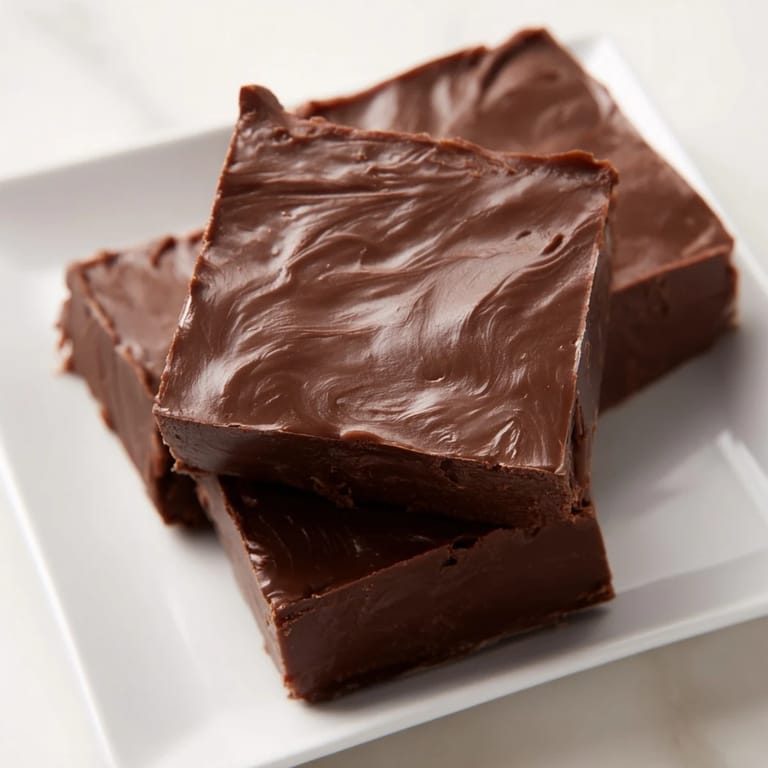
Save Fudge is one of those rare recipes where precision and care actually get rewarded with something genuinely delicious, and once you make it once, you'll understand why people keep asking for more.
Questions & Answers
- → What is the soft-ball stage and why is it important?
The soft-ball stage occurs at 238°F (114°C), indicating the sugar mixture has reached the right consistency for smooth texture. It ensures the confection sets properly without being too hard or runny.
- → Can I use different types of chocolate?
Yes, using milk or dark chocolate chips will influence sweetness and depth of flavor. Semi-sweet chocolate is commonly preferred for balanced taste.
- → How long does it take for the confection to set?
After pouring the mixture into the pan, it typically cools and sets at room temperature for about 2 hours. Refrigeration can speed this process.
- → Are nuts recommended for this confection?
Incorporating chopped toasted walnuts or pecans before setting adds a pleasant crunch and nutty flavor, enhancing the overall texture.
- → What tools are essential for preparing this chocolate confection?
A heavy-bottomed saucepan ensures even heat, a candy thermometer helps monitor temperature accurately, and parchment-lined pans aid in easy removal and slicing.